JOSÉ BARATA

I – Childhood and Adolescence
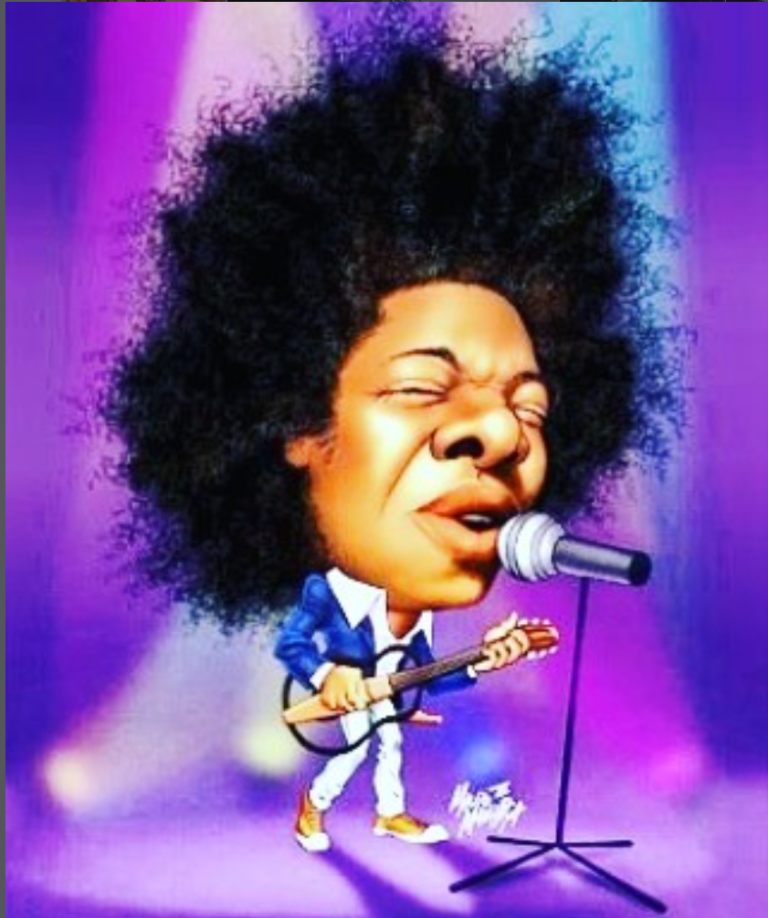
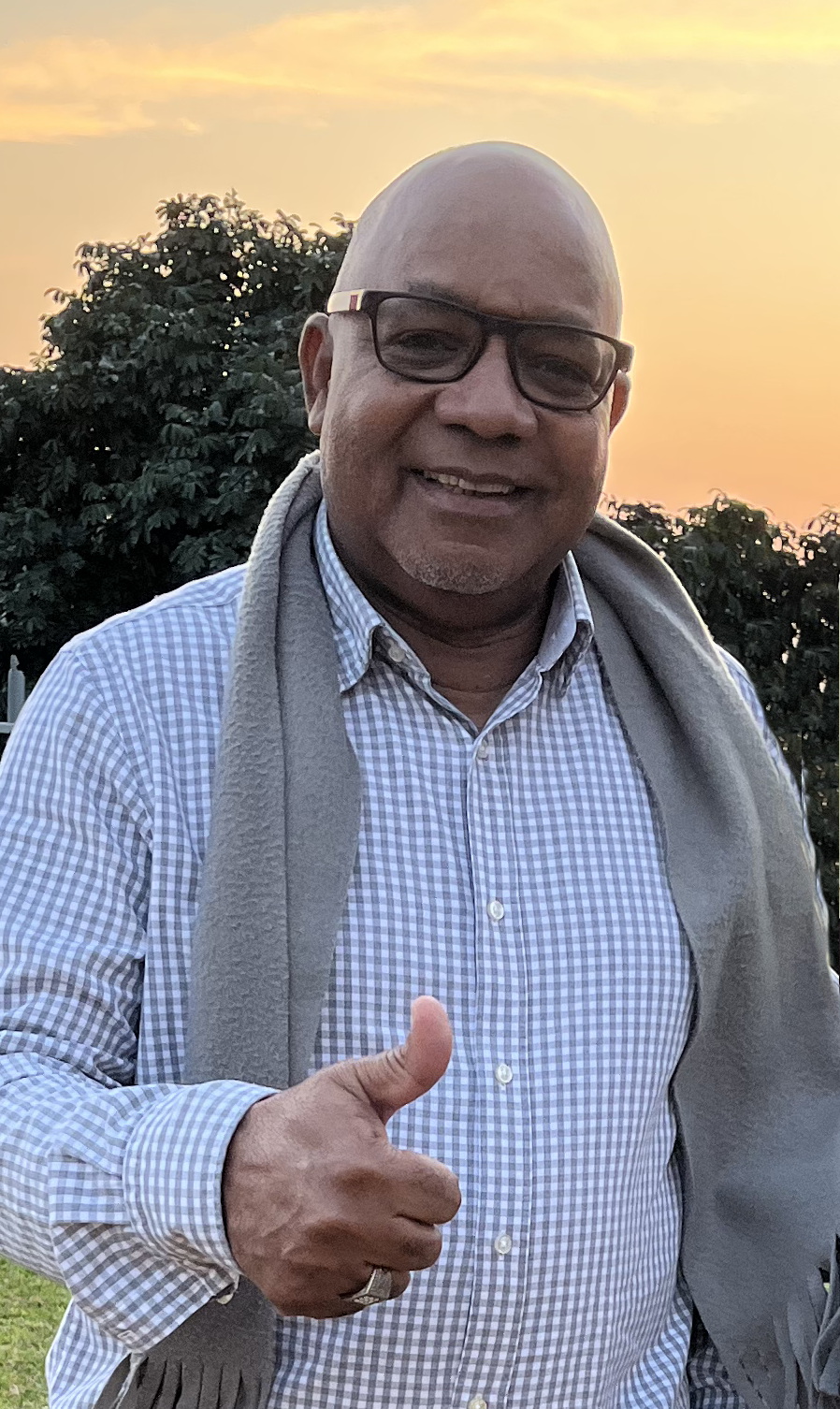
Alfredo José Barata, known by the stage name José Barata, was born on the 13th September 1956 into a modest family of ten siblings, two of whom have since passed away.
His childhood was much like that of other boys: playing football, marbles, and other children’s games, notably ‘hopscoth’.
He had neighbours with whom he spent time who played music, as they were part of the band “Os Ibéricos”. Watching his neighbours play, whilst still a child, sparked his love of music through the brother of one of the musicians in the band, to whose rehearsals he was invited to attend, sometimes fiddling with the musicians’ guitars. That was how José Barata and his friends learnt to play, just for fun in the neighbourhood, without ever thinking they would go on to become professional musicians.
At the age of 13, José Barata began to get involved in music.
One of his neighbours, named Alfredo, was the drummer and practised skydiving; he is now a lawyer.
At home, he was not allowed to play, as his parents disapproved of a career in music.
He performed for the first time at a wedding, during an outing with friends when, at half-time, they asked the band that was playing to let them have a go; permission was granted, and José Barata and his friends played two numbers that were well received. He was 15 years old at the time.
From that moment on, José Barata and his friends began to receive invitations to play in the area where they lived. All this happened without his family knowing a thing.
José Barata founded, together with his friends from the neighbourhood, the group “Os Breves”. At that time, his favourite instrument was the rhythm guitar.
At the age of 16, José Barata was playing with his band and was a well-known musician in the neighbourhood, which upset his parents, leading him to say:
They were afraid I’d drop out of school and end up on the wrong side of the law. That was a widespread view, as musicians were seen as criminals, as outlaws. And that really worried my parents.
José Barata was given a guitar as a gift from a friend. When he showed it to his parents at home, they reacted with such horror that they destroyed it, prompting him to lament:
They smashed my first guitar in a fit of rage.
His parents asked him as well:
Where do you want to go with this music business? What sort of life do you want to lead? Who do you think you’re going to be with all this guitar-playing business?
After this incident, José Barata scaled back his activities and began playing in secret.
José Barata did not always receive compensation for his performance, fearing that his parents would be angry with him for playing the guitar.
As there was a perception within his family that anyone who played the guitar was either a bad-behaved person or a criminal – since music was considered the domain of criminals – there was no atmosphere at home for him to devote himself to music. On one occasion, upon receiving his payment, he handed it over to a friend for safekeeping. It amounted to fifty escudos, which was a great deal of money at the time.
He would take ten escudos each day to go and buy badjias [a local fried pie] and other things.
Fate decided to provide a way out of his parents’ ban. José Barata recounts:
On my sister’s wedding day, there was a band playing. They invited us onto the stage, so we went up and played the song ‘Mammy Blue’. The audience responded with applause; they loved our performance. My whole family was there.
Faced with this turn of events, and having run out of arguments, his parents gave in, much to his relief, giving him the green light to pursue music without fear. So, once playing music was no longer taboo, he was even allowed to bring his guitar into the house.
Alfredo José Barata, known by the stage name José Barata, was born on the 13th September 1956 into a modest family of ten siblings, two of whom have since passed away.
His childhood was much like that of other boys: playing football, marbles, and other children’s games, notably ‘hopscoth’.
He had neighbours with whom he spent time who played music, as they were part of the band “Os Ibéricos”. Watching his neighbours play, whilst still a child, sparked his love of music through the brother of one of the musicians in the band, to whose rehearsals he was invited to attend, sometimes fiddling with the musicians’ guitars. That was how José Barata and his friends learnt to play, just for fun in the neighbourhood, without ever thinking they would go on to become professional musicians.
At the age of 13, José Barata began to get involved in music.
One of his neighbours, named Alfredo, was the drummer and practised skydiving; he is now a lawyer.
At home, he was not allowed to play, as his parents disapproved of a career in music.
He performed for the first time at a wedding, during an outing with friends when, at half-time, they asked the band that was playing to let them have a go; permission was granted, and José Barata and his friends played two numbers that were well received. He was 15 years old at the time.
From that moment on, José Barata and his friends began to receive invitations to play in the area where they lived. All this happened without his family knowing a thing.
José Barata founded, together with his friends from the neighbourhood, the group “Os Breves”. At that time, his favourite instrument was the rhythm guitar.
At the age of 16, José Barata was playing with his band and was a well-known musician in the neighbourhood, which upset his parents, leading him to say:
They were afraid I’d drop out of school and end up on the wrong side of the law. That was a widespread view, as musicians were seen as criminals, as outlaws. And that really worried my parents.
José Barata was given a guitar as a gift from a friend. When he showed it to his parents at home, they reacted with such horror that they destroyed it, prompting him to lament:
They smashed my first guitar in a fit of rage.
His parents asked him as well:
Where do you want to go with this music business? What sort of life do you want to lead? Who do you think you’re going to be with all this guitar-playing business?
After this incident, José Barata scaled back his activities and began playing in secret.
José Barata did not always receive compensation for his performance, fearing that his parents would be angry with him for playing the guitar.
As there was a perception within his family that anyone who played the guitar was either a bad-behaved person or a criminal – since music was considered the domain of criminals – there was no atmosphere at home for him to devote himself to music. On one occasion, upon receiving his payment, he handed it over to a friend for safekeeping. It amounted to fifty escudos, which was a great deal of money at the time.
He would take ten escudos each day to go and buy badjias [a local fried pie] and other things.
Fate decided to provide a way out of his parents’ ban. José Barata recounts:
On my sister’s wedding day, there was a band playing. They invited us onto the stage, so we went up and played the song ‘Mammy Blue’. The audience responded with applause; they loved our performance. My whole family was there.
Faced with this turn of events, and having run out of arguments, his parents gave in, much to his relief, giving him the green light to pursue music without fear. So, once playing music was no longer taboo, he was even allowed to bring his guitar into the house.
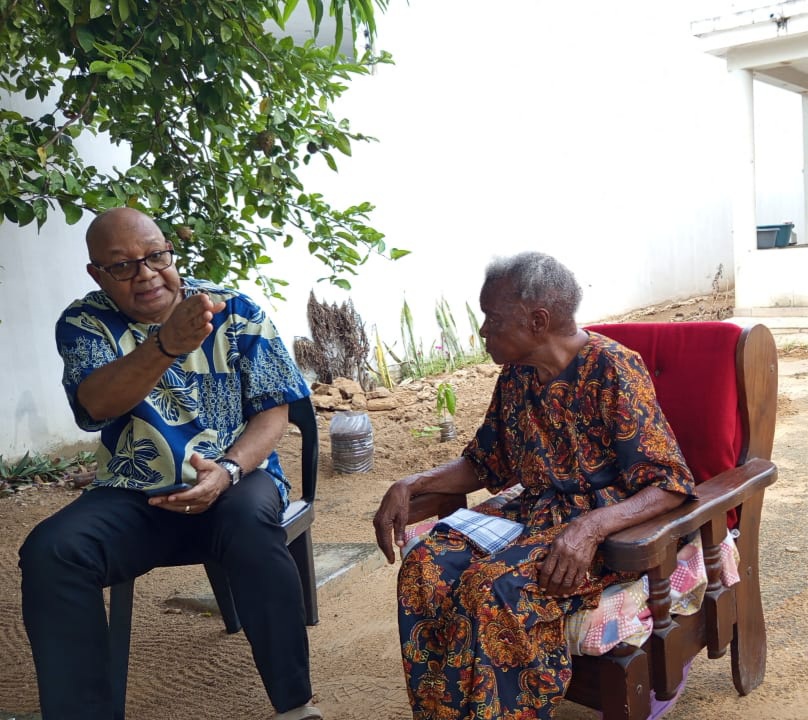
With his mother
II – School Performance
Because of his involvement in music, albeit behind his parents’ backs, José Barata’s school performance suffered, although he believes that part of his school failure was also due to the fact that, during his childhood, his everyday language was Ronga. From pre-primary to the second grade, the fact that teaching was in Ronga, switching to Portuguese only from the third grade onwards, is thought to have contributed to his academic struggles. Education in Ronga, initially, switching to Portuguese in later years, had a negative impact on his academic performance, as he made the transition from an out-of-school environment in Ronga to a new school reality in Portuguese, a language he barely spoke.
José Barata says that then, when he started having a Portuguese teacher, there was a shock during the transition, explaining:
And it wasn’t easy to take it all in from a white woman, because back then it was the Portuguese who taught us, in the ’60s and so on, the ’70s and so on, listening to a voice saying things like ‘the North Star’, ‘the nebula’, and I don’t know what else.
III – Between the Allure of Music and School
Balancing school and music proved difficult, as José Barata himself discovered.
Whilst his musical career was taking off, bringing in some money to supplement the applause he was receiving, his school performance was in a free fall. José Barata failed the second year of the preparatory cycle (equivalent to the current sixth grade) at the Joaquim de Araújo School, now the Estrela Vermelha Secondary School, where he had as classmates, according to his recollection:
“I was a colleague of the distinguished late Amade Camal of Sir Motors, who passed away recently, and of the distinguished Ângelo Mondlane, who was an economist at SADC.“
As a result, he spent a year out of school, before moving on the following year to the evening classes at Liceu António Enes, now known as Francisco Manyanga Secondary School.
In his view, the reason for his poor results was due not only to his musical activities, but also to his limited command of the Portuguese language.
In the afternoons, he began working in a garments factory.
His family sent him to the São Roque Mission school in Matutuine, Bela Vista, because his mother considered him a stubborn boy, even though he did not agree.
Once there, he came into contact with the school’s staff, who were Catholic nuns, and had to speak Portuguese every day. By the time he reached fourth grade, he was communicating in both Ronga and Portuguese, a language in which he had already achieved some fluency. He mixed Portuguese with Ronga, expressing himself in a combination of the two languages.
IV – Entry Into The Labour Market While Still Underage
José Barata has had many jobs. When he failed his exams for the first time, his mother said she didn’t want any unemployed people in the house, stating:
I don’t want people eating for free here. Go and get a job. I’ll find you a place to work.
His mother was a cook in a Portuguese household, and she arranged for her son to speak to her employer, the owner of a car repair shop, right opposite the São Miguel Cinema, now the Assembly of the Republic—known as Autogaragem Imperial.
At the age of 13, José Barata went to work at the repair shop, but he did not stay there long because he was subjected to insults and kicked, which is why he left.
When he told his mother he was leaving, she became very angry with him, and he claimed in his defence:
There they hurl insults, there they hit people.
However, the boss told his mother that they were training the lad. As the lad couldn’t cope, the boss said he should be allowed to stay at home.
Later, he worked as a panel beater’s assistant.
V – Work and the Beginning of a Musical Career
José Barata was out of school for a long time after finishing the fourth grade. In 1973, at the age of 17, he ended up working at a garment factory where his sister was employed, Investro, in the Jardim neighbourhood.
The clothes produced there – shirts, jackets – were deceptively labelled as having been made in France or other places other than Mozambique.
At the factory, he was one of the founders of a band named ‘The Koalas of Investro’ and played the bass guitar between 1977 and 1980.
The Investro band had the support of the factory’s political group [grupo dinamizador].
Along with the band came the travels, as José Barata recalls:
We travelled through several districts, such as Moamba, Inharrime, Xinavane and Ressano Garcia, and provinces across this vast country of Mozambique.
The group regularly went on tour, playing for the works councils at other factories in Maputo Province.
The trips brought adventure, mixed with applause, but they also entailed missing school. In his own words, José Barata says:
I was a good student at school, but my lack of attendance was my Achilles’ heel, my main drawback.
By that time, he was no longer subject to his family’s interference in his life.
Most of the performances were linked to the ruling FRELIMO Party (until 1992, the only legal political party in the country).
The members of the factory band received no remuneration; they were only paid for travel expenses, in addition to the satisfaction of the trips, and the respect and recognition from their colleagues. It was all done for their love for the venture.
At one point, the five band members decided to go back to school, driven by the fact that anyone who had completed the ninth grade, then would have his life sorted.
Within the band, José Barata and the drummer went to Francisco Manyanga Secondary School, while the lead singer, the lead guitarist and the fifth member, Ernesto, went to the Commercial School. He even stated in a television interview:
“They’re all great men now, myself included” [… amid laughter].
VI – Career Path After School
In 1980, having completed the ninth grade, José Barata tried to find employment in the media. He wrote a letter to the newspaper Notícias, another to Tempo magazine, and applied for a vacancy at Rádio Moçambique (RM). Although this vacancy was intended for students with a higher level of education, the interview went well and he was exceptionally admitted, despite having only completed the ninth grade, but on one condition: that he should continue his studies. Having been admitted to RM, José Barata did not respond to the interview request from Revista Tempo received three days after joining RM.
That is how José Barata ended up working at RM as a studio technician, until his retirement.
José Barata was even put through a test for television anchoring. However, he was told that, despite his good voice, he still needed to improve, and was advised to return after a year. He did not do so because he felt comfortable where he was.
He also underwent an audition at TVM (Televisão de Moçambique) to see if he could present the news, and was told that he read and spoke too quickly. He was advised to learn how to breathe properly and improve, and to return at a later date, which he did not do.
This is how the idea of a career in journalism, which had briefly crossed his mind, was eventually forgotten.
He joined the group “África Power” as lead guitarist from 1980 to 1983.
Having been with RM since 1980, José Barata was part of the group Micro-Ondas, made up of RM staff, seen as a sort of RM Junior Band that played at the radio station’s festivities, banquets and some shows in 1984 and 1985.
Until he joined the Micro-Ondas band, José Barata was merely an instrumentalist, playing the guitar. One day, when a backing singer was absent from one of the concerts, José Barata was chosen to fill in, and he performed very well. It was then that José Barata felt he had discovered this gift, fully embracing his role as a singer and guitarist.
With the exodus of most of the group’s members from the country in the 1980s to neighbouring South Africa and Portugal, the band was left depleted and eventually disbanded.
Following the break-up of Micro-Ondas, José Barata, together with Fernando Azevedo and Pacha Viegas, brother of Elvira Viegas, embarked on a new project, forming the group M2 in 1985.
It was a well-rehearsed studio group that did not perform on stage, accompanying musicians in the recording of their songs. The name M2 was inspired by one of the RM studios, called M2.
The group performed with Madala, Elvira Viegas, Gueguê, Elsa Mangue, Magid Mussá, Romualdo, António Maengane, Fany Pfumo, Camal Givá, Pacha Viegas and Rosália Mboa, amongst others.
For José Barata, it was a very joyful experience.
VII – The End of the Bands and the Beginning of a Solo Career
Following the break-up of the band M2 due to the passing of Fernando Azevedo and, later, Pacha Viegas, the group was left unable to continue. José Barata wanted to form another group, this time for live concert performances. However, the project did not go ahead due to the prospective members’ lack of time for rehearsals and the difficulty in coordinating rehearsal times amongst the members.
José Barata believes that to be a quality musician, one must have time for rehearsals, at least three hours a day. The impossibility of coordinating his colleagues’ availability for rehearsals led him to abandon the project of forming a new group.
Not giving up on the idea of continuing to perform, though increasingly convinced that such a possibility was becoming ever more remote, José Barata eventually found a solution to the difficulty of bringing other musicians together in a new group.
Watching the musician Guilherme Silva perform on a television programme in 2000, he was fascinated to see that he had only a guitar and pedals.
The idea of performing as a group was gradually fading from José Barata’s mind.
He bought some pedals in South Africa and embarked on this adventure, as he calls it, and has been performing solo ever since. His problem with coordinating rehearsals was solved; he could rehearse whenever he wanted, needing only to coordinate with his own self, as he himself says.
VIII – Discography
Between 1980 and 1990, José Barata released “Sida Malume”, “Xonguile” and other tracks, which were very successful.
José Barata recorded his first album, entitled “O Melhor de José Barata”, in 1997. This album was released by Record Music in a limited edition of 500 copies.
Because of his involvement in music, albeit behind his parents’ backs, José Barata’s school performance suffered, although he believes that part of his school failure was also due to the fact that, during his childhood, his everyday language was Ronga. From pre-primary to the second grade, the fact that teaching was in Ronga, switching to Portuguese only from the third grade onwards, is thought to have contributed to his academic struggles. Education in Ronga, initially, switching to Portuguese in later years, had a negative impact on his academic performance, as he made the transition from an out-of-school environment in Ronga to a new school reality in Portuguese, a language he barely spoke.
José Barata says that then, when he started having a Portuguese teacher, there was a shock during the transition, explaining:
And it wasn’t easy to take it all in from a white woman, because back then it was the Portuguese who taught us, in the ’60s and so on, the ’70s and so on, listening to a voice saying things like ‘the North Star’, ‘the nebula’, and I don’t know what else.
III – Between the Allure of Music and School
Balancing school and music proved difficult, as José Barata himself discovered.
Whilst his musical career was taking off, bringing in some money to supplement the applause he was receiving, his school performance was in a free fall. José Barata failed the second year of the preparatory cycle (equivalent to the current sixth grade) at the Joaquim de Araújo School, now the Estrela Vermelha Secondary School, where he had as classmates, according to his recollection:
“I was a colleague of the distinguished late Amade Camal of Sir Motors, who passed away recently, and of the distinguished Ângelo Mondlane, who was an economist at SADC.“
As a result, he spent a year out of school, before moving on the following year to the evening classes at Liceu António Enes, now known as Francisco Manyanga Secondary School.
In his view, the reason for his poor results was due not only to his musical activities, but also to his limited command of the Portuguese language.
In the afternoons, he began working in a garments factory.
His family sent him to the São Roque Mission school in Matutuine, Bela Vista, because his mother considered him a stubborn boy, even though he did not agree.
Once there, he came into contact with the school’s staff, who were Catholic nuns, and had to speak Portuguese every day. By the time he reached fourth grade, he was communicating in both Ronga and Portuguese, a language in which he had already achieved some fluency. He mixed Portuguese with Ronga, expressing himself in a combination of the two languages.
IV – Entry Into The Labour Market While Still Underage
José Barata has had many jobs. When he failed his exams for the first time, his mother said she didn’t want any unemployed people in the house, stating:
I don’t want people eating for free here. Go and get a job. I’ll find you a place to work.
His mother was a cook in a Portuguese household, and she arranged for her son to speak to her employer, the owner of a car repair shop, right opposite the São Miguel Cinema, now the Assembly of the Republic—known as Autogaragem Imperial.
At the age of 13, José Barata went to work at the repair shop, but he did not stay there long because he was subjected to insults and kicked, which is why he left.
When he told his mother he was leaving, she became very angry with him, and he claimed in his defence:
There they hurl insults, there they hit people.
However, the boss told his mother that they were training the lad. As the lad couldn’t cope, the boss said he should be allowed to stay at home.
Later, he worked as a panel beater’s assistant.
V – Work and the Beginning of a Musical Career
José Barata was out of school for a long time after finishing the fourth grade. In 1973, at the age of 17, he ended up working at a garment factory where his sister was employed, Investro, in the Jardim neighbourhood.
The clothes produced there – shirts, jackets – were deceptively labelled as having been made in France or other places other than Mozambique.
At the factory, he was one of the founders of a band named ‘The Koalas of Investro’ and played the bass guitar between 1977 and 1980.
The Investro band had the support of the factory’s political group [grupo dinamizador].
Along with the band came the travels, as José Barata recalls:
We travelled through several districts, such as Moamba, Inharrime, Xinavane and Ressano Garcia, and provinces across this vast country of Mozambique.
The group regularly went on tour, playing for the works councils at other factories in Maputo Province.
The trips brought adventure, mixed with applause, but they also entailed missing school. In his own words, José Barata says:
I was a good student at school, but my lack of attendance was my Achilles’ heel, my main drawback.
By that time, he was no longer subject to his family’s interference in his life.
Most of the performances were linked to the ruling FRELIMO Party (until 1992, the only legal political party in the country).
The members of the factory band received no remuneration; they were only paid for travel expenses, in addition to the satisfaction of the trips, and the respect and recognition from their colleagues. It was all done for their love for the venture.
At one point, the five band members decided to go back to school, driven by the fact that anyone who had completed the ninth grade, then would have his life sorted.
Within the band, José Barata and the drummer went to Francisco Manyanga Secondary School, while the lead singer, the lead guitarist and the fifth member, Ernesto, went to the Commercial School. He even stated in a television interview:
“They’re all great men now, myself included” [… amid laughter].
VI – Career Path After School
In 1980, having completed the ninth grade, José Barata tried to find employment in the media. He wrote a letter to the newspaper Notícias, another to Tempo magazine, and applied for a vacancy at Rádio Moçambique (RM). Although this vacancy was intended for students with a higher level of education, the interview went well and he was exceptionally admitted, despite having only completed the ninth grade, but on one condition: that he should continue his studies. Having been admitted to RM, José Barata did not respond to the interview request from Revista Tempo received three days after joining RM.
That is how José Barata ended up working at RM as a studio technician, until his retirement.
José Barata was even put through a test for television anchoring. However, he was told that, despite his good voice, he still needed to improve, and was advised to return after a year. He did not do so because he felt comfortable where he was.
He also underwent an audition at TVM (Televisão de Moçambique) to see if he could present the news, and was told that he read and spoke too quickly. He was advised to learn how to breathe properly and improve, and to return at a later date, which he did not do.
This is how the idea of a career in journalism, which had briefly crossed his mind, was eventually forgotten.
He joined the group “África Power” as lead guitarist from 1980 to 1983.
Having been with RM since 1980, José Barata was part of the group Micro-Ondas, made up of RM staff, seen as a sort of RM Junior Band that played at the radio station’s festivities, banquets and some shows in 1984 and 1985.
Until he joined the Micro-Ondas band, José Barata was merely an instrumentalist, playing the guitar. One day, when a backing singer was absent from one of the concerts, José Barata was chosen to fill in, and he performed very well. It was then that José Barata felt he had discovered this gift, fully embracing his role as a singer and guitarist.
With the exodus of most of the group’s members from the country in the 1980s to neighbouring South Africa and Portugal, the band was left depleted and eventually disbanded.
Following the break-up of Micro-Ondas, José Barata, together with Fernando Azevedo and Pacha Viegas, brother of Elvira Viegas, embarked on a new project, forming the group M2 in 1985.
It was a well-rehearsed studio group that did not perform on stage, accompanying musicians in the recording of their songs. The name M2 was inspired by one of the RM studios, called M2.
The group performed with Madala, Elvira Viegas, Gueguê, Elsa Mangue, Magid Mussá, Romualdo, António Maengane, Fany Pfumo, Camal Givá, Pacha Viegas and Rosália Mboa, amongst others.
For José Barata, it was a very joyful experience.
VII – The End of the Bands and the Beginning of a Solo Career
Following the break-up of the band M2 due to the passing of Fernando Azevedo and, later, Pacha Viegas, the group was left unable to continue. José Barata wanted to form another group, this time for live concert performances. However, the project did not go ahead due to the prospective members’ lack of time for rehearsals and the difficulty in coordinating rehearsal times amongst the members.
José Barata believes that to be a quality musician, one must have time for rehearsals, at least three hours a day. The impossibility of coordinating his colleagues’ availability for rehearsals led him to abandon the project of forming a new group.
Not giving up on the idea of continuing to perform, though increasingly convinced that such a possibility was becoming ever more remote, José Barata eventually found a solution to the difficulty of bringing other musicians together in a new group.
Watching the musician Guilherme Silva perform on a television programme in 2000, he was fascinated to see that he had only a guitar and pedals.
The idea of performing as a group was gradually fading from José Barata’s mind.
He bought some pedals in South Africa and embarked on this adventure, as he calls it, and has been performing solo ever since. His problem with coordinating rehearsals was solved; he could rehearse whenever he wanted, needing only to coordinate with his own self, as he himself says.
VIII – Discography
Between 1980 and 1990, José Barata released “Sida Malume”, “Xonguile” and other tracks, which were very successful.
José Barata recorded his first album, entitled “O Melhor de José Barata”, in 1997. This album was released by Record Music in a limited edition of 500 copies.
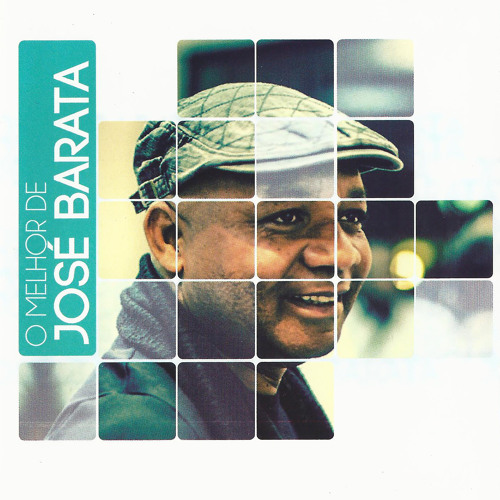
With the album having been sold out, José Barata attempted to reissue it, but following the death of the head of Record Music, it was no longer possible to trace where all the materials from the recording of the first album were stored.
After more than a decade’s wait, José Barata released his second album, also titled “O Melhor de José Barata”, in September 2014, featuring nine new tracks.
The album was recorded at ZEP, Zé Pires’ studio, and sponsored by FUNDAC (Fund for Artistic and Cultural Development) and the Mozambican Hydrocarbons Company (CMH).
IX – José Barata’s Themes and Style
José Barata says he draws inspiration from everyday life in his musical creations.
As he puts it, indeed:
In my songs, I portray reality. Most of my songs aren’t about my own life, but about the experiences I witness and the books I read. I put myself in other people’s shoes and write.
In the 1980s, he wrote a song about the AIDS crisis.
Apparently, the song “Sida Malume” was the first in the country to address this disease.
In the song “Grito de Molwene”, José Barata puts himself in the shoes of a street child and recounts his daily life. José Barata says that, as a father, he is no stranger to this reality, and it touches him deeply. This is how José Barata puts himself in the place of an orphan who has no one to support him.
In “Adriana”, from his second album, José Barata recounts the experiences of a teenager exposed to the dangers of the world: prostitution, teenage pregnancy, drugs, among other evils. José Barata offers some advice:
We, parents, must look after our children and keep them in check before they go astray and end up controlling us.
José Barata sees himself as a romantic composer, conveying this sense of romanticism in his compositions.
Although working on music can be tiring and stressful, it’s still enjoyable because the work itself is fun.
X – The Trials and Tribulations of “Xonguile”
In his songs, José Barata explores social issues.
The love and beauty of Mozambican women are also prominent themes in José Barata’s music, who says:
Mozambique is a country full of beautiful women. I had the pleasure of visiting the provinces of this vast country and getting to know them. In the song ‘Xonguile’ (meaning ‘beautiful’ in Changana, a language spoken in Southern Mozambique), I tried to capture their beauty and charm.
The song ‘Xonguile’ was played on the radio and became an anthem, which, in his own view, gave his career a major boost and made him a household name.
XI – Meeting with the President of the Republic
The outfits worn by the members of the band “Os Kwalas da lnvestro” [The Koalas of Investro] were provided by the clothing factory and made there.
In 1978, during a gala performance at which “Os Kwalas da lnvestro” played and which was attended by the President of the Republic, Samora Machel, the musicians were dressed in formal attire while they played.
On seeing them dressed so formally, President Samora told them that musicians should wear musicians’ clothes, as they were special individuals and should behave as such.
The factory followed the President’s instructions and made new outfits: tunics and trousers more in keeping with the artists’ image.
XII – International Experience
In 1991, José Barata took part, as a guest, in a festival of African music in Europe (the Netherlands, Germany and Switzerland), playing with the band Marrabenta.
It was a new experience for the artist, who encountered a new dynamic of hard work. José Barata recounts having spent 12 intense days, along which the afternoons were filled with rehearsals, evening performances, travel in the mornings and the opportunity to socialise with other renowned artists from across the African continent.
In 1990, now working as a solo artist, at the invitation of Aurélio Le Bon’s Movimento production company, he toured the Netherlands, Switzerland, Austria and Germany, performing with the now defunct Marrabenta Moçambique group. This tour allowed him to broaden his knowledge and experience.
After more than a decade’s wait, José Barata released his second album, also titled “O Melhor de José Barata”, in September 2014, featuring nine new tracks.
The album was recorded at ZEP, Zé Pires’ studio, and sponsored by FUNDAC (Fund for Artistic and Cultural Development) and the Mozambican Hydrocarbons Company (CMH).
IX – José Barata’s Themes and Style
José Barata says he draws inspiration from everyday life in his musical creations.
As he puts it, indeed:
In my songs, I portray reality. Most of my songs aren’t about my own life, but about the experiences I witness and the books I read. I put myself in other people’s shoes and write.
In the 1980s, he wrote a song about the AIDS crisis.
Apparently, the song “Sida Malume” was the first in the country to address this disease.
In the song “Grito de Molwene”, José Barata puts himself in the shoes of a street child and recounts his daily life. José Barata says that, as a father, he is no stranger to this reality, and it touches him deeply. This is how José Barata puts himself in the place of an orphan who has no one to support him.
In “Adriana”, from his second album, José Barata recounts the experiences of a teenager exposed to the dangers of the world: prostitution, teenage pregnancy, drugs, among other evils. José Barata offers some advice:
We, parents, must look after our children and keep them in check before they go astray and end up controlling us.
José Barata sees himself as a romantic composer, conveying this sense of romanticism in his compositions.
Although working on music can be tiring and stressful, it’s still enjoyable because the work itself is fun.
X – The Trials and Tribulations of “Xonguile”
In his songs, José Barata explores social issues.
The love and beauty of Mozambican women are also prominent themes in José Barata’s music, who says:
Mozambique is a country full of beautiful women. I had the pleasure of visiting the provinces of this vast country and getting to know them. In the song ‘Xonguile’ (meaning ‘beautiful’ in Changana, a language spoken in Southern Mozambique), I tried to capture their beauty and charm.
The song ‘Xonguile’ was played on the radio and became an anthem, which, in his own view, gave his career a major boost and made him a household name.
XI – Meeting with the President of the Republic
The outfits worn by the members of the band “Os Kwalas da lnvestro” [The Koalas of Investro] were provided by the clothing factory and made there.
In 1978, during a gala performance at which “Os Kwalas da lnvestro” played and which was attended by the President of the Republic, Samora Machel, the musicians were dressed in formal attire while they played.
On seeing them dressed so formally, President Samora told them that musicians should wear musicians’ clothes, as they were special individuals and should behave as such.
The factory followed the President’s instructions and made new outfits: tunics and trousers more in keeping with the artists’ image.
XII – International Experience
In 1991, José Barata took part, as a guest, in a festival of African music in Europe (the Netherlands, Germany and Switzerland), playing with the band Marrabenta.
It was a new experience for the artist, who encountered a new dynamic of hard work. José Barata recounts having spent 12 intense days, along which the afternoons were filled with rehearsals, evening performances, travel in the mornings and the opportunity to socialise with other renowned artists from across the African continent.
In 1990, now working as a solo artist, at the invitation of Aurélio Le Bon’s Movimento production company, he toured the Netherlands, Switzerland, Austria and Germany, performing with the now defunct Marrabenta Moçambique group. This tour allowed him to broaden his knowledge and experience.
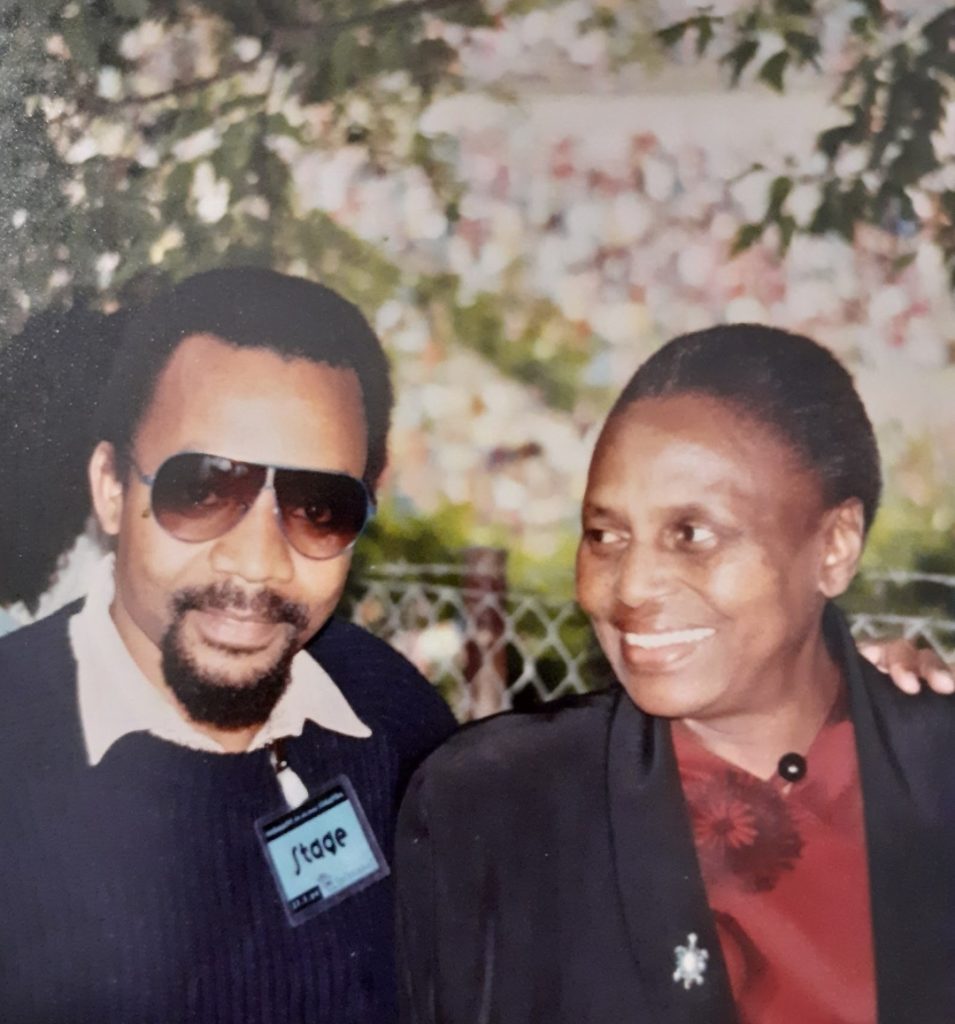
With Miriam Makeba, South African, in Berlin
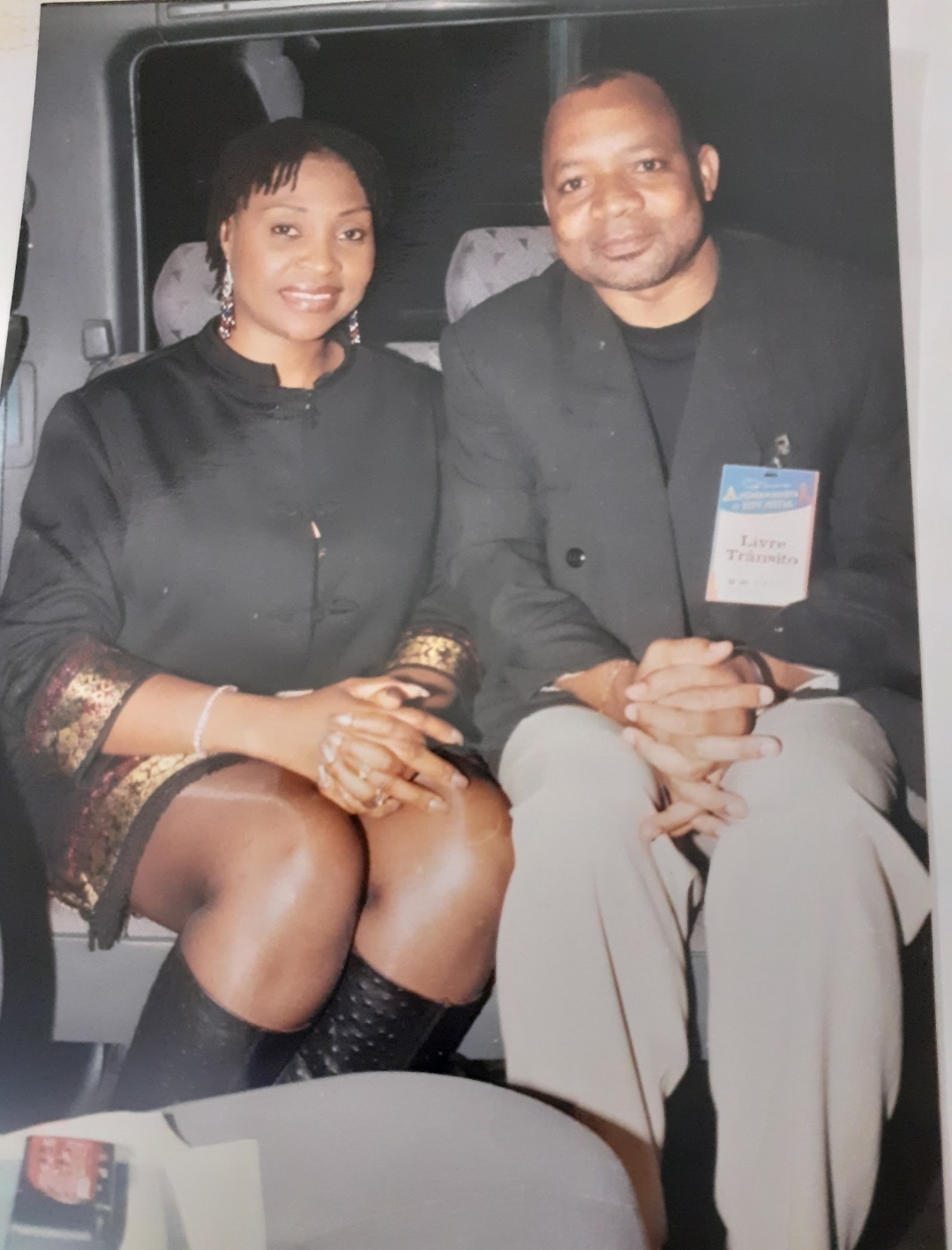
With Ivone Tchaka Tchaka, South African
XIII – Post-Retirement Activity
José Barata has retired from Rádio Moçambique after 35 years of service, while remaining active on the music scene, performing solo at events or in bars and restaurants.
José Barata feels that the 35 years he spent working at RM were like a college education.
José Barata says, philosophically, that if it were possible to turn back time, he would not have become a musician and would have chosen to study instead, as being a musician in Mozambique means being subject to various limits.
XIV – Social Responsibility
In 1993, he took part in the launch and promotion of the ‘Jeito’ condom in the central provinces of Sofala, Manica and Tete, where, at that time, HIV infection rates were alarmingly high. The tour featured performances by the musicians Stewart Sukuma, Albertina Pascoal, Romualdo and Gueguê.
Particularly noteworthy are his compositions “Sida Malume Cuidado Mata” in 1987 – at a time when little was known about AIDS – and “Todos Pela Paz” in 1994, a song set to the poem by the musician Tomás Moyana.
“Sida Malume” was created in response to a request from the Ministry of Health, then headed by Leonardo Simão, who is also a friend of his. AIDS was not being discussed in Mozambique and very few people knew about this disease, this virus or this scourge.
José Barata, José Guimarães and Aniano Tamele contributed their songs to this Ministry of Health project, which was embodied in the song “Sida Malume” in the case of José Barata.
XV – Culture
José Barata played a part in the musical and cultural scene with the radio programme “Nostalgia da Música Moçambicana” [Nostalgia for Mozambican Music], which he produced and presented, and that was broadcast on Radio Cidade in Maputo from 1998 to 2000.
On Televisão de Moçambique [Mozambique TV], José Barata presented the programme “Masseve”, dedicated to promoting Mozambican music, in 1997 and 1998.
José Barata has retired from Rádio Moçambique after 35 years of service, while remaining active on the music scene, performing solo at events or in bars and restaurants.
José Barata feels that the 35 years he spent working at RM were like a college education.
José Barata says, philosophically, that if it were possible to turn back time, he would not have become a musician and would have chosen to study instead, as being a musician in Mozambique means being subject to various limits.
XIV – Social Responsibility
In 1993, he took part in the launch and promotion of the ‘Jeito’ condom in the central provinces of Sofala, Manica and Tete, where, at that time, HIV infection rates were alarmingly high. The tour featured performances by the musicians Stewart Sukuma, Albertina Pascoal, Romualdo and Gueguê.
Particularly noteworthy are his compositions “Sida Malume Cuidado Mata” in 1987 – at a time when little was known about AIDS – and “Todos Pela Paz” in 1994, a song set to the poem by the musician Tomás Moyana.
“Sida Malume” was created in response to a request from the Ministry of Health, then headed by Leonardo Simão, who is also a friend of his. AIDS was not being discussed in Mozambique and very few people knew about this disease, this virus or this scourge.
José Barata, José Guimarães and Aniano Tamele contributed their songs to this Ministry of Health project, which was embodied in the song “Sida Malume” in the case of José Barata.
XV – Culture
José Barata played a part in the musical and cultural scene with the radio programme “Nostalgia da Música Moçambicana” [Nostalgia for Mozambican Music], which he produced and presented, and that was broadcast on Radio Cidade in Maputo from 1998 to 2000.
On Televisão de Moçambique [Mozambique TV], José Barata presented the programme “Masseve”, dedicated to promoting Mozambican music, in 1997 and 1998.
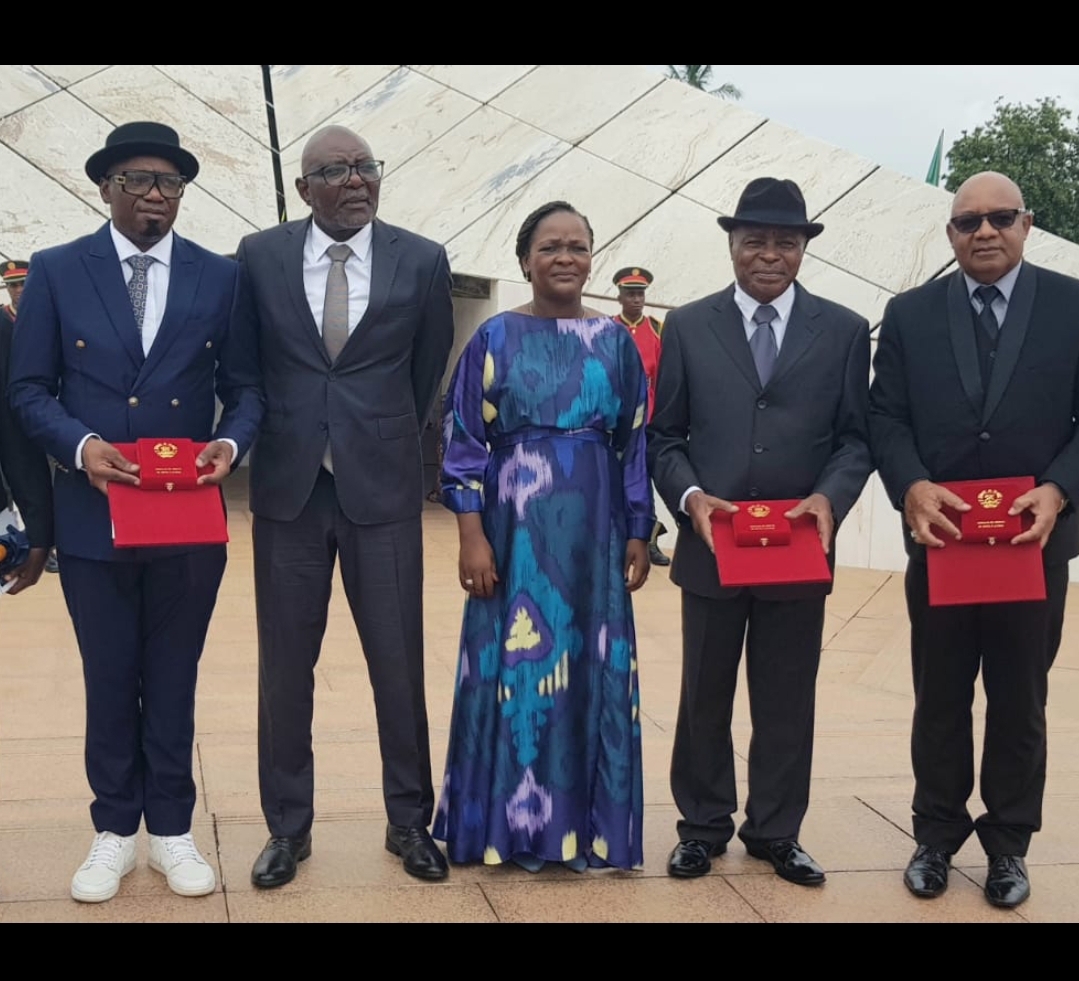
Jimmy Dludlu, Filimone Meigos, Eldevina Materula, Minister of Culture and Tourism, Salimo Mohammed and José Barata, from left to right, with three of the award-winners from the music world
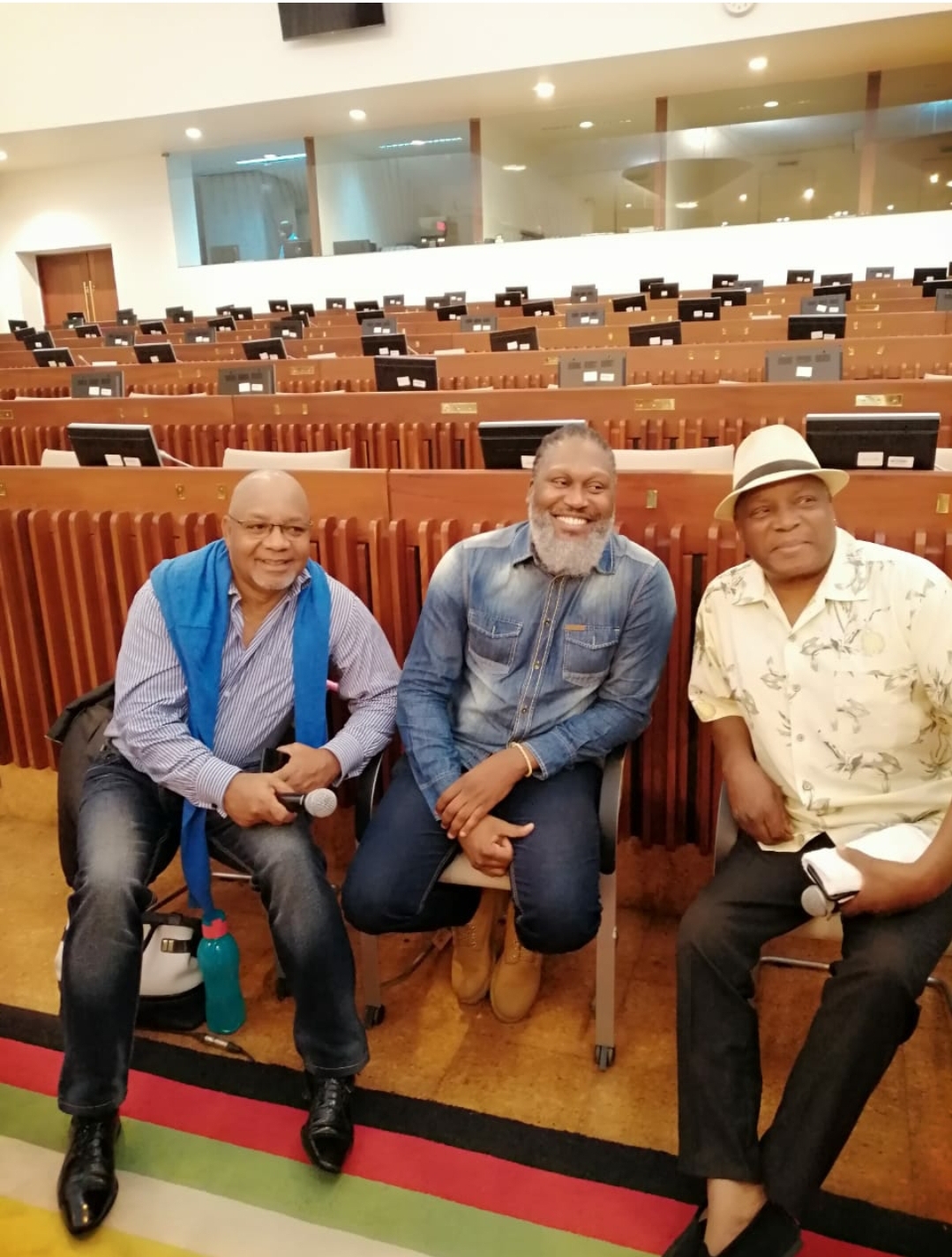
José Barata, left, with Miguel Xabindza and Wazimbo, at Parliament
XVI – Compliance with Copyright
José Barata is concerned about piracy.
The singer Isabel Novella, on her debut album – which bears her own name – performs the song “Xonguile”. Despite his satisfaction at seeing one of his compositions performed by another artist – a testament to the recognition of the author’s merit – he did not hide his disappointment at the infringement of his copyright.
Although José Barata had granted permission to the South African production company Native Rhythms Productions and to Isabel Novella, who had promised him a certain percentage of the profits for the use of the song, that promise was not honoured.
Having spoken to SOMAS (the Mozambican Authors’ Association) to contact the publisher, the situation remains unchanged to this day, to the point where José Barata has given up.
Another case that upsets José Barata is that, despite having collaborated on the song ‘Pela Paz’ with Tomás Moiane, who wrote the lyrics, when the song was released, the joint authorship of Tomás Moiane and José Barata was completely ignored, with other artists being credited instead, to the detriment of the actual authors or composers.
XVII – AMMO
José Barata was a member of the executive committee of the Mozambican Musicians Association (AMMO), working in the secretariat, before stepping down during his second term of office.
AMMO is committed to promoting musicians and is striving to bring out the best in Mozambican music. José Barata observes that, in Mozambique, musicians have no place in society, no socio-professional status, and music is not regarded as a profession; there is a perception that being a musician in the country is synonymous with being a criminal, an outcast and a rebel.
XVIII – On Music in Mozambique
José Barata believes that Mozambique has everything it needs to develop a music industry.
Looking at the current state of Mozambican music, José Barata has no doubt that it is in good shape, with young artists who are making a name for themselves.
To this end, policies should be drawn up to facilitate its development, the musician believes.
Despite the adversities he has faced, he considers himself a happy musician.
XIX – Personal Life
José Barata got married in 1977, after three months of dating; it had been love at first sight. His family was against the marriage but eventually accepted his choice. In any case, it was a very short-lived marriage.
Following the breakdown of his brief marriage, José Barata lived with a partner from 1992 to 1996. After this experience, José Barata never remarried.
José Barata has five children – three boys and two girls – and considers himself a hands-on father who would never leave his children under any circumstances.
XX – Honours
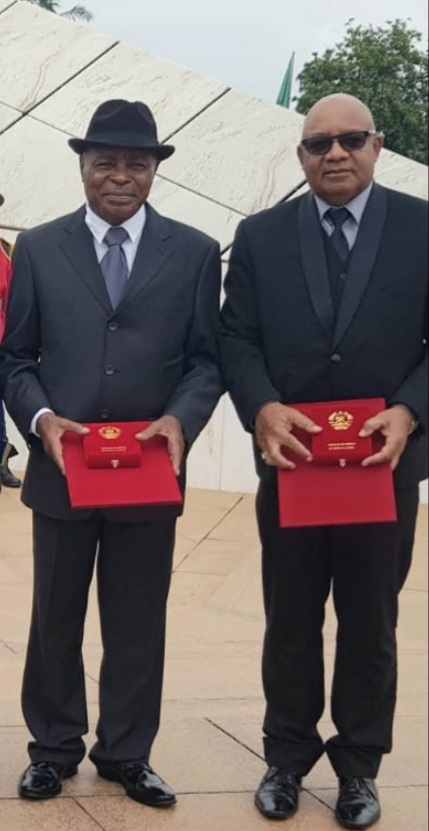
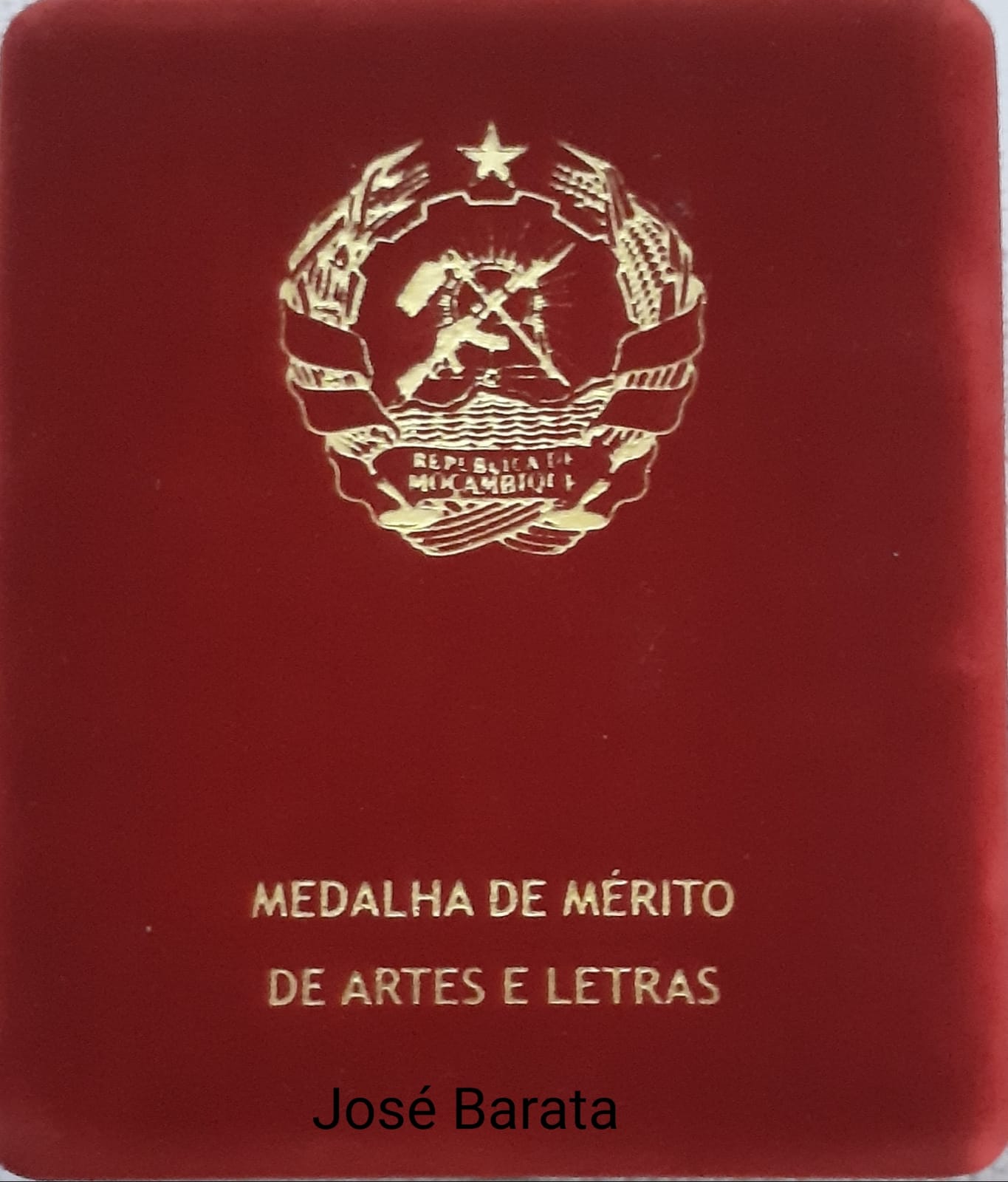
On the 3rd February 2023, José Barata was awarded the Medal of Merit for Arts and Letters by the President of the Republic, a development that moved him deeply.
José Barata is concerned about piracy.
The singer Isabel Novella, on her debut album – which bears her own name – performs the song “Xonguile”. Despite his satisfaction at seeing one of his compositions performed by another artist – a testament to the recognition of the author’s merit – he did not hide his disappointment at the infringement of his copyright.
Although José Barata had granted permission to the South African production company Native Rhythms Productions and to Isabel Novella, who had promised him a certain percentage of the profits for the use of the song, that promise was not honoured.
Having spoken to SOMAS (the Mozambican Authors’ Association) to contact the publisher, the situation remains unchanged to this day, to the point where José Barata has given up.
Another case that upsets José Barata is that, despite having collaborated on the song ‘Pela Paz’ with Tomás Moiane, who wrote the lyrics, when the song was released, the joint authorship of Tomás Moiane and José Barata was completely ignored, with other artists being credited instead, to the detriment of the actual authors or composers.
XVII – AMMO
José Barata was a member of the executive committee of the Mozambican Musicians Association (AMMO), working in the secretariat, before stepping down during his second term of office.
AMMO is committed to promoting musicians and is striving to bring out the best in Mozambican music. José Barata observes that, in Mozambique, musicians have no place in society, no socio-professional status, and music is not regarded as a profession; there is a perception that being a musician in the country is synonymous with being a criminal, an outcast and a rebel.
XVIII – On Music in Mozambique
José Barata believes that Mozambique has everything it needs to develop a music industry.
Looking at the current state of Mozambican music, José Barata has no doubt that it is in good shape, with young artists who are making a name for themselves.
To this end, policies should be drawn up to facilitate its development, the musician believes.
Despite the adversities he has faced, he considers himself a happy musician.
XIX – Personal Life
José Barata got married in 1977, after three months of dating; it had been love at first sight. His family was against the marriage but eventually accepted his choice. In any case, it was a very short-lived marriage.
Following the breakdown of his brief marriage, José Barata lived with a partner from 1992 to 1996. After this experience, José Barata never remarried.
José Barata has five children – three boys and two girls – and considers himself a hands-on father who would never leave his children under any circumstances.
XX – Honours
On the 3rd February 2023, José Barata was awarded the Medal of Merit for Arts and Letters by the President of the Republic, a development that moved him deeply.
Medal of Merit for Arts and Letters awarded to José Barata
With Salimo Mohammed or Simeão Mazuze, on the left