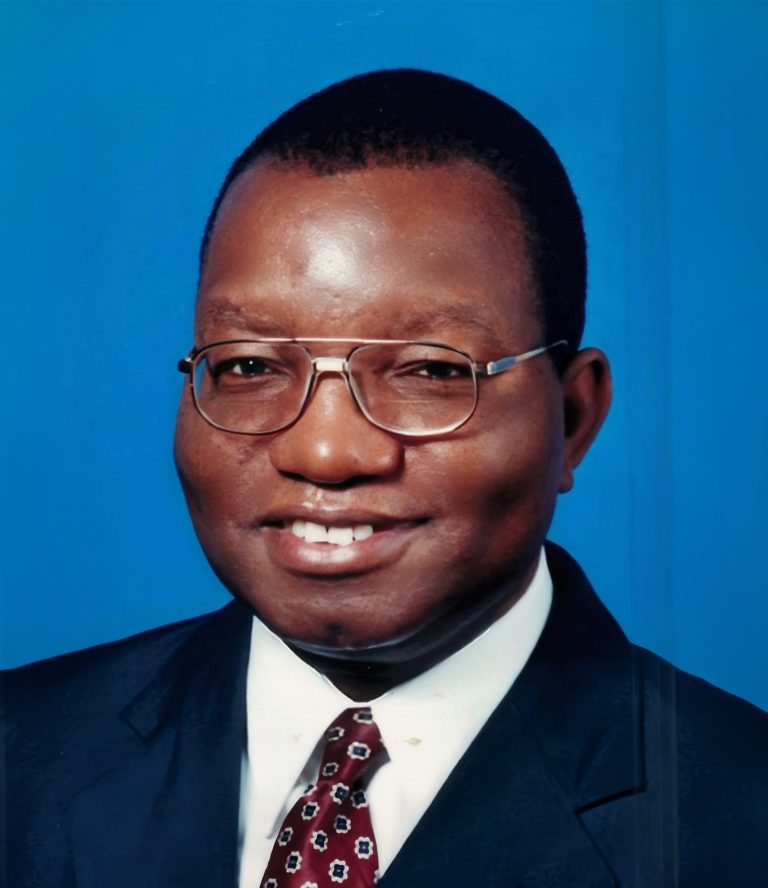
STEWART SUKUMA

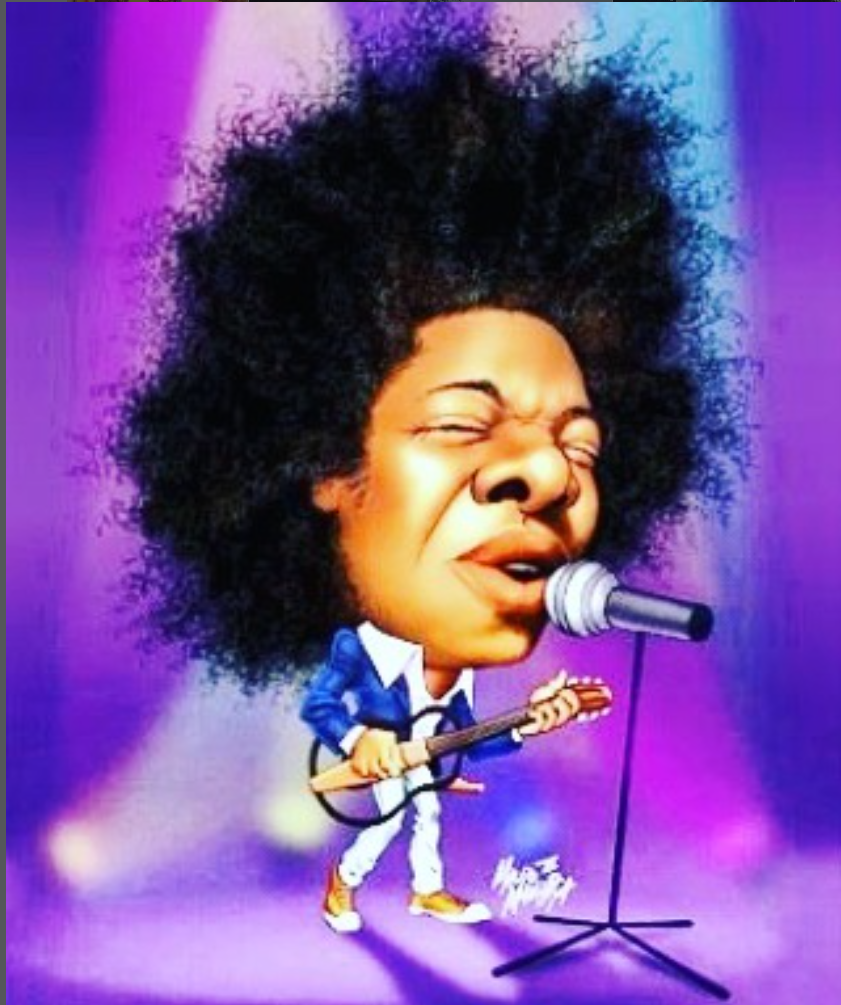
Stewart Sukuma
Born Luís Pereira in 1963 in Cuamba, Niassa Province, Mozambique, Stewart Sukuma grew up in a modest family, the son of a truck driver and a homemaker. He later adopted the stage name Stewart Sukuma, meaning “rise up” in Xitsonga and “push” in Swahili. He received his first guitar as a Christmas gift, an object that would decisively shape his life. For family reasons, he moved to Maputo in 1977, where he began learning percussion instruments, guitar, and piano, laying the foundations of a musical path marked by curiosity, discipline, and cultural responsibility.
Born Luís Pereira in 1963 in Cuamba, Niassa Province, Mozambique, Stewart Sukuma grew up in a modest family, the son of a truck driver and a homemaker. He later adopted the stage name Stewart Sukuma, meaning “rise up” in Xitsonga and “push” in Swahili. He received his first guitar as a Christmas gift, an object that would decisively shape his life. For family reasons, he moved to Maputo in 1977, where he began learning percussion instruments, guitar, and piano, laying the foundations of a musical path marked by curiosity, discipline, and cultural responsibility.
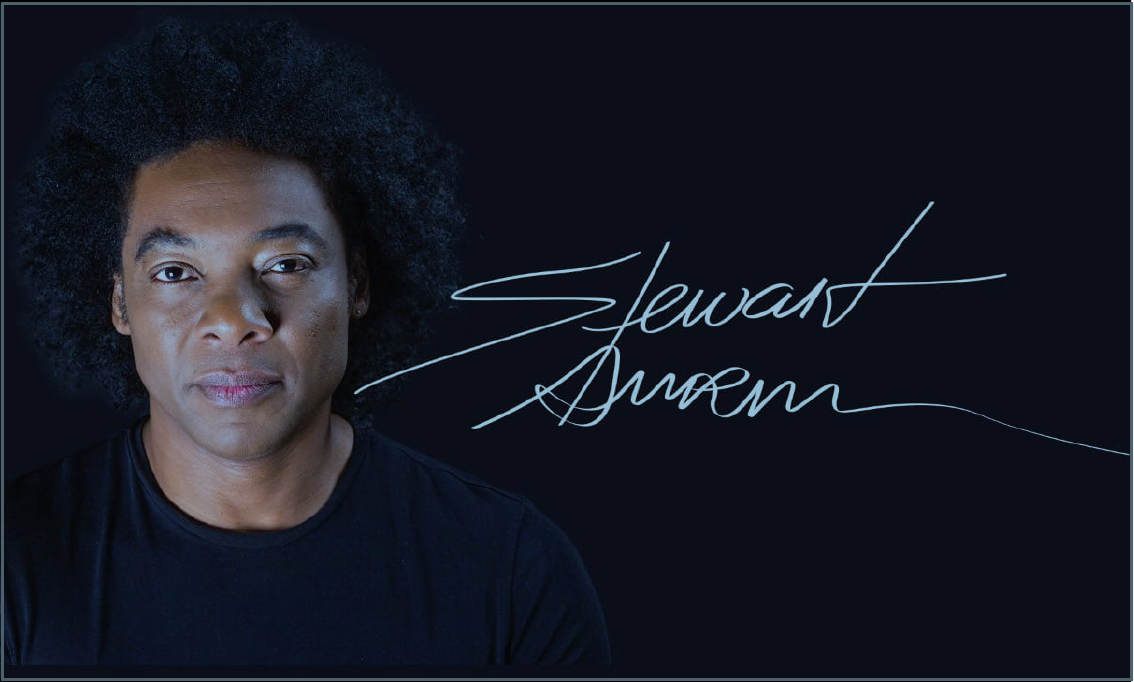
Artistic Beginnings and Musical Formation
Stewart Sukuma began his artistic journey as a teenager through dance, an experience that deeply shaped his sense of rhythm, body awareness, and collective expression — elements that would later become central to his music. Immersed in Mozambican traditional rhythms, he simultaneously absorbed international musical influences, singing songs by global artists while engaging with key Mozambican musicians such as Hortêncio Langa, Arão Litsuri, Lisboa Matavele, Fani Pfumo, among others.
During this formative period, he convived, performed, and exchanged musically with Alexandre Langa, whose musicianship and discipline influenced Sukuma’s artistic growth, although they never lived together. A decisive reference in this stage was Jaco Maria, a renowned Mozambican singer who became one of Sukuma’s most important mentors — almost a tutor — shaping his vocal approach, artistic ethics, and professional rigor.
For several years, Stewart Sukuma performed in bars and nightclubs, refining his stage presence, vocal control, and relationship with audiences. He later moved to Eswatini, where he recorded and performed with George Lee, a jazz musician from Ghana, an experience that expanded his harmonic language and deepened his engagement with jazz and pan-African musical dialogue.
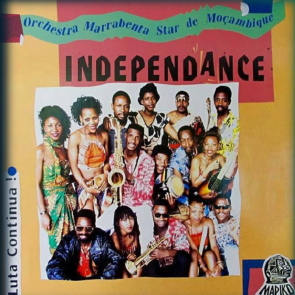
Following this period, he joined the Orquestra Marrabenta, one of Mozambique’s most important musical institutions, with Aurélio Le Bon as manager, consolidating his professional status and national visibility.
Stewart Sukuma began his artistic journey as a teenager through dance, an experience that deeply shaped his sense of rhythm, body awareness, and collective expression — elements that would later become central to his music. Immersed in Mozambican traditional rhythms, he simultaneously absorbed international musical influences, singing songs by global artists while engaging with key Mozambican musicians such as Hortêncio Langa, Arão Litsuri, Lisboa Matavele, Fani Pfumo, among others.
During this formative period, he convived, performed, and exchanged musically with Alexandre Langa, whose musicianship and discipline influenced Sukuma’s artistic growth, although they never lived together. A decisive reference in this stage was Jaco Maria, a renowned Mozambican singer who became one of Sukuma’s most important mentors — almost a tutor — shaping his vocal approach, artistic ethics, and professional rigor.
For several years, Stewart Sukuma performed in bars and nightclubs, refining his stage presence, vocal control, and relationship with audiences. He later moved to Eswatini, where he recorded and performed with George Lee, a jazz musician from Ghana, an experience that expanded his harmonic language and deepened his engagement with jazz and pan-African musical dialogue.
Following this period, he joined the Orquestra Marrabenta, one of Mozambique’s most important musical institutions, with Aurélio Le Bon as manager, consolidating his professional status and national visibility.
Career Advancement and Artistic Identity
Stewart Sukuma’s first major musical project was Banda Formação 82. In 1982, he recorded his first song, Música Quente, at EME Studios. The song won the Best Performance Award at Mozambique’s first national music competition, marking the official beginning of his professional career.
Stewart Sukuma’s first major musical project was Banda Formação 82. In 1982, he recorded his first song, Música Quente, at EME Studios. The song won the Best Performance Award at Mozambique’s first national music competition, marking the official beginning of his professional career.
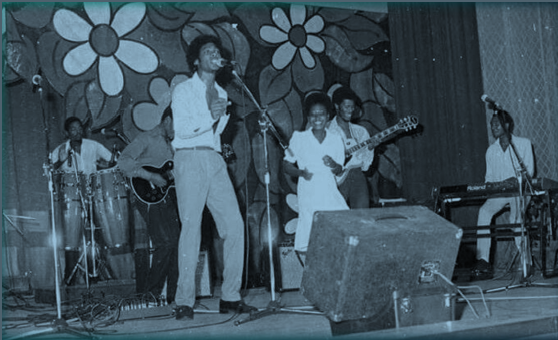
The song stood out for its originality. At a time when most popular music in Mozambique was performed in local languages, Música Quente was written in Portuguese and infused with reggae influences, distinguished by its production quality and contemporary sensibility. This choice announced a defining characteristic of Sukuma’s career: his ability to move between tradition and modernity without diluting either.
His research into Mozambican popular and traditional rhythms led him to work closely with the Companhia Nacional de Canto e Dança, under the coordination of David Abílio, and ARPAC, the national institution responsible for preserving traditional rhythms. Through this work, he toured nationally and internationally and worked as a sound technician and supporting performer, deepening both technical and cultural knowledge that would later inform his work as an arranger and producer.
His research into Mozambican popular and traditional rhythms led him to work closely with the Companhia Nacional de Canto e Dança, under the coordination of David Abílio, and ARPAC, the national institution responsible for preserving traditional rhythms. Through this work, he toured nationally and internationally and worked as a sound technician and supporting performer, deepening both technical and cultural knowledge that would later inform his work as an arranger and producer.
Artistic Versatility and Creative Range
Stewart Sukuma is widely recognized for his artistic versatility. His work moves fluently between marrabenta, afro-jazz, reggae, acoustic music, contemporary popular song, and experimental formats, always anchored in Mozambican identity.
Beyond being a singer-songwriter, he is an arranger, producer, and conceptual creator, often conceiving music as part of a wider narrative that includes image, performance, and civic meaning. His repertoire ranges from intimate acoustic compositions to rhythm-driven collective works, from poetic introspection to direct social critique.
Stewart Sukuma is widely recognized for his artistic versatility. His work moves fluently between marrabenta, afro-jazz, reggae, acoustic music, contemporary popular song, and experimental formats, always anchored in Mozambican identity.
Beyond being a singer-songwriter, he is an arranger, producer, and conceptual creator, often conceiving music as part of a wider narrative that includes image, performance, and civic meaning. His repertoire ranges from intimate acoustic compositions to rhythm-driven collective works, from poetic introspection to direct social critique.
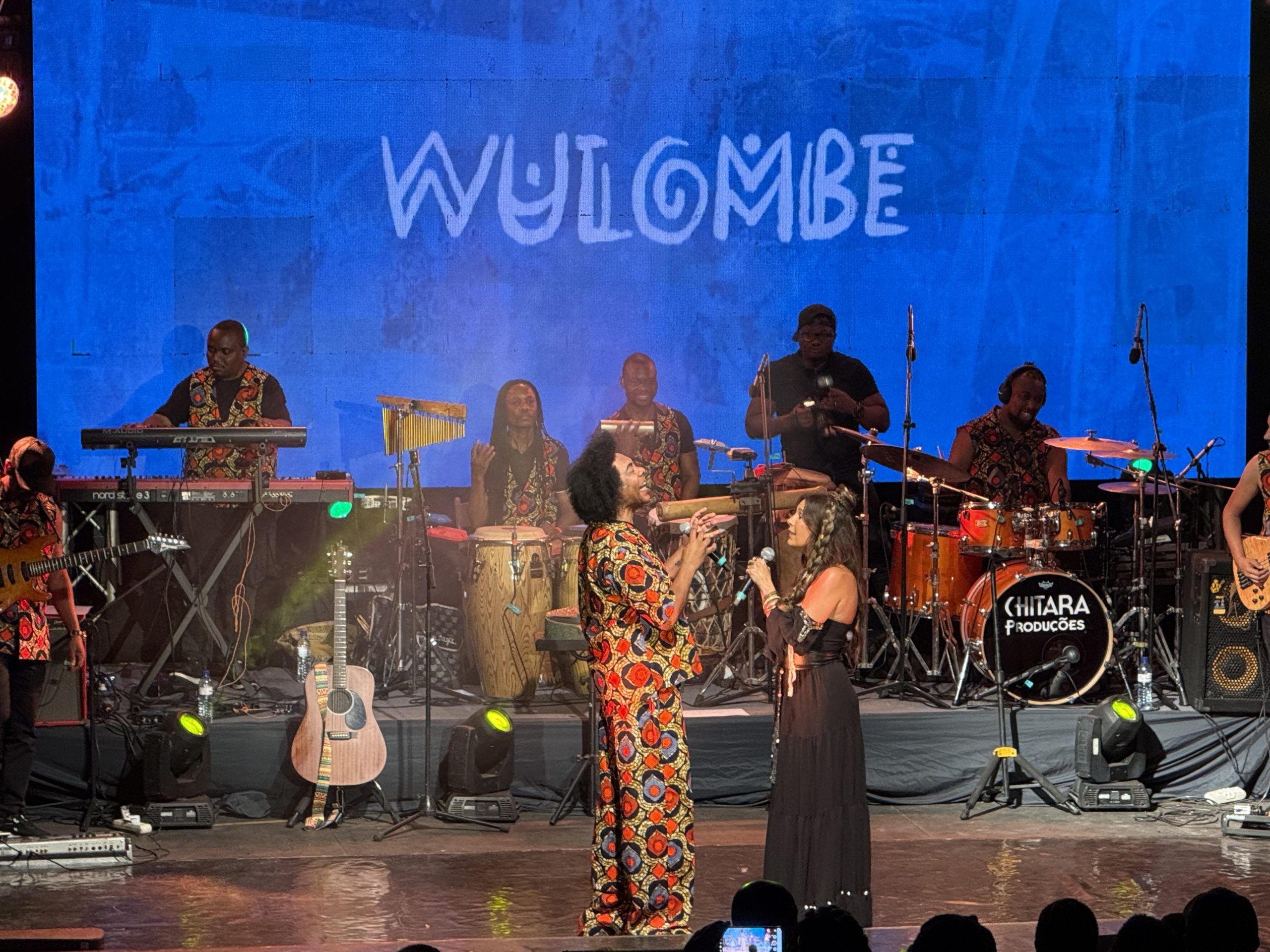
A landmark example of this dimension is “A Música da Paz”, written, arranged, produced, and visually directed by Stewart Sukuma. Conceived as both an artistic and civic statement, the project positions music as an instrument of reconciliation, dialogue, and collective healing, reinforcing Sukuma’s belief that in African societies, music is not entertainment alone, but a moral and social language.
National and International Influence
Stewart Sukuma has developed a self-taught and collaborative approach, learning from and exchanging with senior musicians and cultural figures such as George Lee, Hugh Masekela, Oliver Mtukudzi, Rabada Za Ntaka, Duo Seara, Pedro Ben, Lisboa Matavele, Lalarita (Cândido de Araújo Lolo), and João Wate.
In Mozambique, he acknowledges decisive collaborations with Costa Neto and Baba Harris (Mbila), Hortêncio Langa and Arão Litsuri (Banda Alambique), Alexandre Langa, Zeca Tcheco, Wazimbo, José Mucavele, Grupo RM, and Orquestra Marrabenta.
Stewart Sukuma has developed a self-taught and collaborative approach, learning from and exchanging with senior musicians and cultural figures such as George Lee, Hugh Masekela, Oliver Mtukudzi, Rabada Za Ntaka, Duo Seara, Pedro Ben, Lisboa Matavele, Lalarita (Cândido de Araújo Lolo), and João Wate.
In Mozambique, he acknowledges decisive collaborations with Costa Neto and Baba Harris (Mbila), Hortêncio Langa and Arão Litsuri (Banda Alambique), Alexandre Langa, Zeca Tcheco, Wazimbo, José Mucavele, Grupo RM, and Orquestra Marrabenta.
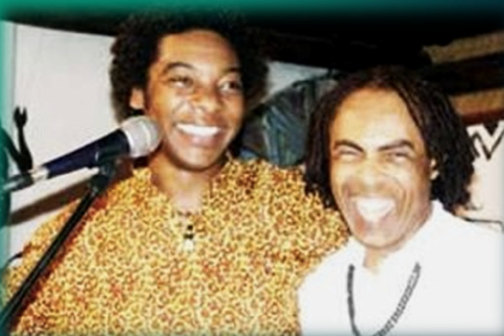
Internationally, he has collaborated and shared artistic platforms with Gilberto Gil, Luís Represas, Ivan Lins, Rui Veloso, Ana Moura, Cuca Roseta, Lee Ritenour, and Hugh Masekela, through concerts, recordings, festivals, and cultural exchange projects, reinforcing his role as a bridge between African musical heritage and global contemporary music.
Education, Mentorship, and Structural Impact
Stewart Sukuma studied at Berklee College of Music and is currently a member of the Berklee Africa Advisory Council.
As a direct result of his initiative, Berklee conducted its first-ever auditions in Africa, an operation led and facilitated by Sukuma. This initiative resulted in Albino Mbie receiving a full scholarship to study music in the United States. Albino Mbie is today a faculty member at Berklee College of Music, representing a concrete and lasting outcome of Sukuma’s commitment to access and excellence.
He has also played a decisive role in projecting the careers of Mozambican musicians such as Jimmy Dludlu, Moreira Chonguiça, and Ali Faque, offering stages, visibility, and early professional opportunities that were critical to their development.
Stewart Sukuma studied at Berklee College of Music and is currently a member of the Berklee Africa Advisory Council.
As a direct result of his initiative, Berklee conducted its first-ever auditions in Africa, an operation led and facilitated by Sukuma. This initiative resulted in Albino Mbie receiving a full scholarship to study music in the United States. Albino Mbie is today a faculty member at Berklee College of Music, representing a concrete and lasting outcome of Sukuma’s commitment to access and excellence.
He has also played a decisive role in projecting the careers of Mozambican musicians such as Jimmy Dludlu, Moreira Chonguiça, and Ali Faque, offering stages, visibility, and early professional opportunities that were critical to their development.
Social and Civic Engagement
Stewart Sukuma is a prominent social and civic activist, consistently integrating music with public advocacy. In addition to health-related campaigns on HIV/AIDS and breast cancer, he has been a strong and visible advocate for women’s rights and the fight against gender-based violence, using his artistic platform to challenge cultural norms and promote accountability.
Stewart Sukuma is a prominent social and civic activist, consistently integrating music with public advocacy. In addition to health-related campaigns on HIV/AIDS and breast cancer, he has been a strong and visible advocate for women’s rights and the fight against gender-based violence, using his artistic platform to challenge cultural norms and promote accountability.

During the COVID-19 pandemic, Stewart Sukuma produced a dedicated musical work in partnership with the Ministry of Health, aimed at public awareness, prevention, and collective responsibility. In the same period, he produced and curated twelve online concerts, bringing together Mozambican artists living across the world, maintaining cultural connection, economic support, and artistic visibility during global lockdowns.
He has collaborated extensively with STAE – National Elections Commission, producing audiovisual material for civic education and voter awareness since Mozambique’s first multiparty elections in 1994.
In 2012, he was appointed UNICEF’s first Goodwill Ambassador in Mozambique, supporting child protection, education, and health initiatives. In recognition of his sustained advocacy, Stewart Sukuma was named a Human Rights Champion by the United Nations, acknowledging his long-standing commitment to justice, equity, democratic participation, women’s rights, and social accountability.
He has collaborated extensively with STAE – National Elections Commission, producing audiovisual material for civic education and voter awareness since Mozambique’s first multiparty elections in 1994.
In 2012, he was appointed UNICEF’s first Goodwill Ambassador in Mozambique, supporting child protection, education, and health initiatives. In recognition of his sustained advocacy, Stewart Sukuma was named a Human Rights Champion by the United Nations, acknowledging his long-standing commitment to justice, equity, democratic participation, women’s rights, and social accountability.
Television and Media
Stewart Sukuma is also a television presenter and cultural communicator, with a significant presence in Mozambican broadcast media. He has hosted and participated in several television programmes, including Txopela Moçambique, a flagship programme dedicated to culture, identity, and tourism, as well as Fama Show, among others.
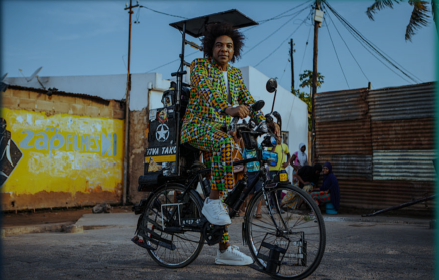
Through television, Sukuma expanded his role as a public intellectual and cultural mediator, bringing music, heritage, and social debate to wider audiences.
Cinema and Acting
Stewart Sukuma has an established presence in cinema as an actor and soundtrack composer. He acted in and composed the soundtrack for Ancoradouro do Tempo, directed by Sol de Carvalho and based on a book by Mia Couto, a film addressing complex social issues within Mozambican society.
Stewart Sukuma has an established presence in cinema as an actor and soundtrack composer. He acted in and composed the soundtrack for Ancoradouro do Tempo, directed by Sol de Carvalho and based on a book by Mia Couto, a film addressing complex social issues within Mozambican society.
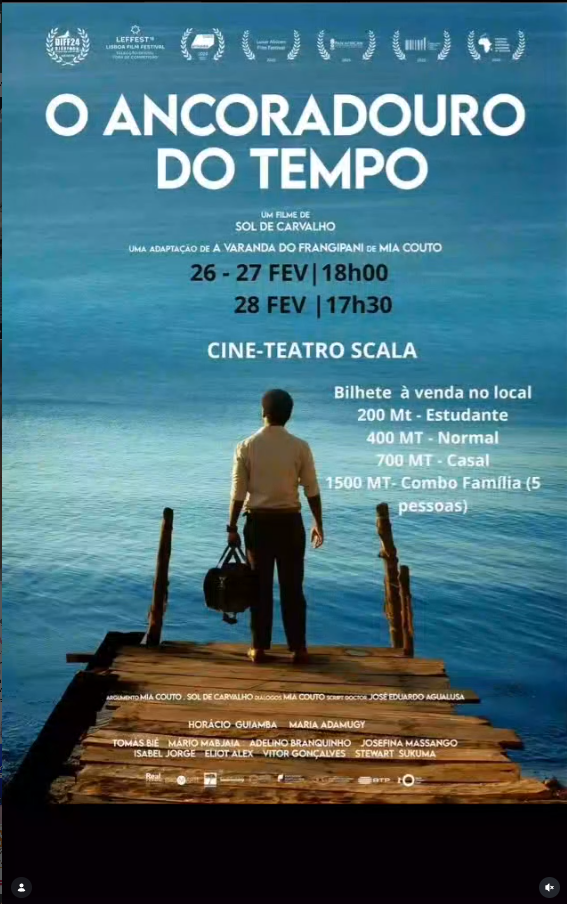
He also appeared in The Lucky Specials (South Africa), where his song “Male” features in the soundtrack, and was involved in the production context of Ali, directed by Michael Mann and starring Will Smith, partially filmed in Mozambique.
Poetry
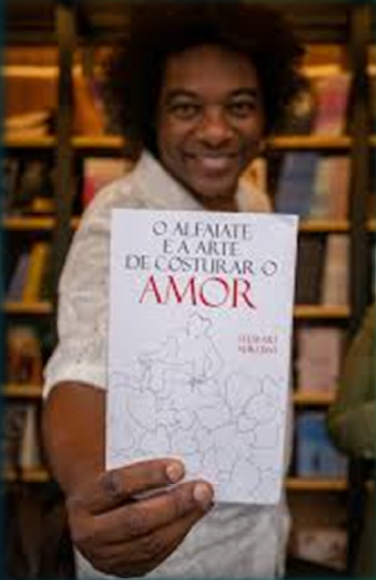
In 2022, Stewart Sukuma published his first poetry book, “The Tailor And The Art Of Sewing Love”, compiling one hundred poems written over a decade. The book was presented at the Lisbon Book Fair and includes a preface by José Eduardo Agualusa. The work reflects his vision of Mozambique as a society that must be “sewn together” through memory, dialogue, and responsibility.
In 2022, Stewart Sukuma published his first poetry book, “The Tailor And The Art Of Sewing Love”, compiling one hundred poems written over a decade. The book was presented at the Lisbon Book Fair and includes a preface by José Eduardo Agualusa. The work reflects his vision of Mozambique as a society that must be “sewn together” through memory, dialogue, and responsibility.
Professional Memberships
Stewart Sukuma is a member of the Recording Academy (GRAMMYs), reinforcing his active participation in global professional music networks.
Stewart Sukuma is a member of the Recording Academy (GRAMMYs), reinforcing his active participation in global professional music networks.
Awards, Honours and Distinctions
I – Music Awards: Ngoma Mozambique Awards
1983 – Best Performance, Ngoma Mozambique
1992 – Press Award, Ngoma Mozambique – “Josefina”
1994 – Popular Song of the Year, Ngoma Mozambique – “Julieta”
1996 – Best Song of the Year, Ngoma Mozambique – “Afrikiti”
2008 – Popular Song of the Year, Ngoma Mozambique
2010 – Popular Song of the Year, Ngoma Mozambique
1983 – Best Performance, Ngoma Mozambique
1992 – Press Award, Ngoma Mozambique – “Josefina”
1994 – Popular Song of the Year, Ngoma Mozambique – “Julieta”
1996 – Best Song of the Year, Ngoma Mozambique – “Afrikiti”
2008 – Popular Song of the Year, Ngoma Mozambique
2010 – Popular Song of the Year, Ngoma Mozambique
II – Other Music Awards
1997 – Mozart Award / UNESCO – Best Musician
2009 – Mozambique Music Awards (MMA) – Best Pop Music – “Olumwengo Remix”
2010 – MOAMAS – Best Alternative Song of the Year
2013 – Mozambique Music Awards (MMA) – Bestselling CD – 30 Anos de Carreira
2015 – Mozambique Music Awards (MMA) – Best Contemporary Music – “Xitchuketa Marrabenta”
2015 – Mozambique Music Awards (MMA) – Bestselling CD – Boleia Africana / Os Sete Pecados Capitais
III – Cultural Distinctions
2008 – Cultural Personality of the Year – Jornal Notícias
2012 – Cultural Personality – Jornal Savana
2008 – Cultural Personality of the Year – Jornal Notícias
2012 – Cultural Personality – Jornal Savana
IV – State and National Honours
Medal of Merit in Arts and Letters – awarded by the Government of the Republic of Mozambique, in recognition of his contribution to Mozambican culture and the promotion of Mozambican cultural values
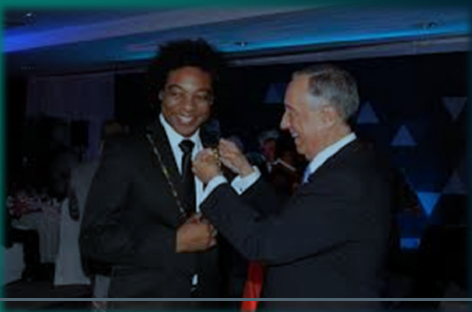
2016 – Officer of the Order of Merit of Portugal, awarded by the President of the Portuguese Republic, Marcelo Rebelo de Sousa
Honorary Citizen of Quelimane – awarded by the Municipality of Quelimane in recognition of his contribution to Mozambican culture and his artistic career
Medal of Merit in Arts and Letters – awarded by the Government of the Republic of Mozambique, in recognition of his contribution to Mozambican culture and the promotion of Mozambican cultural values
2016 – Officer of the Order of Merit of Portugal, awarded by the President of the Portuguese Republic, Marcelo Rebelo de Sousa
Honorary Citizen of Quelimane – awarded by the Municipality of Quelimane in recognition of his contribution to Mozambican culture and his artistic career
V – International and Institutional Distinctions
2012 – Appointed the first National Goodwill Ambassador for UNICEF Mozambique
United Nations Human Rights Champion – recognised by the United Nations for his contribution to human rights, social awareness and cultural engagement
VI – Sophia Award – Portugal
2026 – Sophia Award for Best Original Song, awarded by the Portuguese Academy of Cinema for the song “Tempo”, written and composed by Stewart Sukuma and performed by Belita and Domingas, for the film O Ancoradouro do Tempo, directed by Sol de Carvalho and based on the work of Mozambican writer Mia Couto